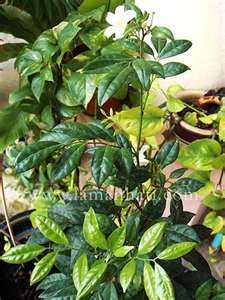
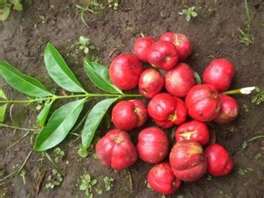
Cubeb (Piper cubeba) grew to climb to a height of 15 meters and thick stems can reach 2 cm
Roots: Rooted fibers, brownish yellow
Interest: Compound, grain shape, length 30-10 cm. Flowers cubeb often called rinu
shaped ears, which usually "crossed" face to face with a leaf
that appears in the book area branch shoots. Fruit that will grow
of grains in the form of fruit that stemmed buni.
Trunk: berbuku-book
Leaves: Leaves oval, with pointed tip, like betel leaves and colored
dark green. At the base of the book can also branch out new shoots, or
interest that would become the fruit.
Scientific Klasifiasi:
Kingdom: Plantae
Divisio: Magnoliophyta
Class: Magnoliopsida
Order: piperales
Tribe: Piperaceae
Marga: piper
Species: P.cubeba
Binomial name: Piper cubeba
Usefulness:
Fruit Piper cubeba efficacious as a medicine shortness of breath, body warmers and deodorizing mulut.Untuk shortness of breath drug in use ± 15 grams of powdered seeds Piper cubeba, brewed with a hot cup of boiled water, after the cold filtered.
Chemical content
The fruit of this plant contain substances: oil fly (terpene-terpene, kadinen, kebeda-camphor, azulen), kubebin, acid-kubeba, resin-kubeba, gums, bitter substances, manganese and starch.
Anatomy Piper cubeba L.f.
Descriptions of the. The smell is aromatic; taste somewhat spicy and bitter.
Macroscopic: Fruit: nearly spherical shape, generally a diameter approximately 5 mm; there is a bulge at the base of 5mm to 10mm, less than 1mm thick; sometimes the base of the bulge region slightly concave. Outer surface: Generally similar hard crimped woven mesh, sometimes flat, brown or gray brown to black; surface in a smooth, light brown. Nut shell: "Colour dark brown, wrinkled. The core seed: Mainly teriri of perisperm, the top rwedapat small endosperm with the embryo inside
Microscopic. Endikarp: consists of a layer of long rectangular cells with thickened outer walls, contains the substance is yellow or brownish color and prismatic calcium oxalate hblur. Hypodermic: Consists of stone cells and thin-walled parenchyma tissue. Tues stone: Shaped isodiametris or long terms, of approximately 35 μm, single or clustered, thick walls berlignin, yellowish color, the entire node is clear, contains grains of starch. Tues oil: oval-shaped, oil-filled besarv yellow or brownish yellow perenkim mesokarp widely spread among the outside. File collateral vessels: There is in the network mesokarp a smaller-celled, slightly stretched tangentially and thin-walled; file pembulu mainly composed of spiral vessels sometimes there is a similar stone cell fibers. Mesokarp: The inside consists of a thin-walled parenchyma which generally makes a turn into parenchymal bernoktah in older seeds. Endocarp: Consists of 1 or 2 layers of yellow stone cells, rectangular to rectangular, compact and upright, its size is 30 μm to 80 μm or 130 μm (in older seeds), very thick walls, channel branching node, lumen narrow and clear. Nut shell: made up of several layers of cells extending tangential or archive, brown or reddish brown. Perisperm: Consists of large cells, polygonal-shaped thin walls, filled with starch grain size of 2 μm to 12 μm, the oil cells scattered in perisperm.
Powder: Color yellowish brown to dark brown. Endocarp fragment is a fragment identifier, with stone cells, rectangular or square, compact, upright, very thick wall of layered, colored yellow or brown, clear channel nokyah and lumen, and a hypodermic epikarp fragments with parenchymal tissue cells between the stone, hypodermic stone cells are smaller than endocarp of stone cells, thick walls yellow or brownish yellow, isodiametris or polygonal shape, parenchymal perisperm polygonal-shaped, thin wall, containing starch grains or oil, starch grains single or plural, spiral vessel in the form of fibers and stone cells short vessels from the file.
Plant physiology:
Piper cubeba included in the crop cycle fotosintetiknya C-3 because the plant Piper cubeba photosynthetic cells do not have a clear beam; energy needs (CO2: ATP: NADPH) is 1:3:2; there photorespiration, the optimum temperature for photosynthesis of 15-25 ° C.
Bronchitis is a respiratory illness, characterized by mucus hypersecretion and chronic productive cough over and over again for at least 3 months per year, or at least 2 consecutive years in patients who have known no other cause (Anonimc), 2009). Various efforts have been used by the community in tackling this disease, one of them using tradisioanal medicine (herbal medicine).
One of the plants that can be used for the treatment of bronchitis is cubeb plant (Piper cubeba Lf). Sumathykutty (1999) mentioned that Piper cubeba can be used for the treatment of coughs, bronchitis, gastrointestinal diseases and rheumatism. Heyne (1950) also mentions the benefits of cubeb (Piper cubeba) as a stimulant expectorant in bronchial mucous membranes. Indonesian society had also been used as traditional medicine cubeb. However the effectiveness and quality of traditional medicine is still a lot of untested, especially concerning a matter of convenience (sense) maupaun extract the size of the dose used. It is very important especially for the treatment of a relatively long time such as bronchitis, among others to prevent boredom in patients taking the drug for the traditional and the dosing errors that can result in unwanted effects.
Above problem can be overcome with the innovation of new dosage forms by leveraging existing technology. Among them is the formulation in the dosage form lozenges. Lozenges are the type of preparation that has taste and sucked in the wearer by means mukut. This preparation is very suitable for the treatment of infections of the mouth or throat (Anonymous, 1995).
Implementation of the ideas can be done through collaboration between academia, the pharmaceutical industry and society. Academics involved in conducting research to find the optimum formula of plant extracts lozenges cubeb, which will be submitted to the pharmaceutical industry to evaluate whether it can be produced industrially. While the public can participate in the cultivation of crops cubeb, so they can assist in the provision of raw materials if the industrial-scale production can be realized.
This innovation is expected to be able to overcome the problems in traditional medicine. User comfort and safety of lozenges is better so it can be said to be more acceptable. The expectation of compliance drug use will also increase. With several advantages that are owned, lozenges cubeb extract could be a new prospective alternative in the treatment of bronchitis tradisioanal plant-based.
IDEAS
A. Bronchitis Disease
Bronchitis is a disorder of mucus hypersecretion and chronic productive cough over and over again for at least 3 months per year, or at least 2 consecutive years in patients who are not known to other causes. Symptoms and clinical signs that arise in patients bronchitis depends on the area and severity of the disease, disorder sites, and presence or absence of further complications. The hallmark of this disease is the presence of chronic cough with sputum production, the haemaptoe and recurrent pneumonia. Symptoms and clinical signs can be so great in severe disease, and may not be apparent or no symptoms in mild disease (Anonimc), 2009)
According to the Report of the WHO Expert Committee on Smoking Control, smoking is a major cause of the onset of bronchitis. Pathologically smoking-related hyperplasia of bronchial mucous glands and respiratory tract epithelial metaplasia skuamus can also cause acute bronkostriksi. Meanwhile, according to Institute for Disaster Coordinating Problems Smoking (LM3) Baradja Fuad (2009), Indonesia is a country with the third-largest number of smokers from all over the country in the world that is, after China and India (Anonimb), 2009). Thus the risk of bronchitis in Indonesia is high.
Herbal medicines to be one of the alternative treatment of bronchitis which attracted many people to this day. Besides easily accessible, drugs from natural materials are also cheaper, so affordable to the wider community. In addition there are many people who still consider traditional medicines are safer than synthetic drugs, but that assumption is not entirely true because in doses that do not fit the traditional drugs can also cause unwanted effects.
Relation to bronchitis, the people of Indonesia have long been known cubeb plant (Piper cubeba) as one of the traditional medicine of choice. Fruit cubeb is one ingredient of natural medicine that is widely used as a treatment of asthma (Syamsuhidayat and Hutapea, 1991). The fruit is used as a spice in addition cubeb also been used in the treatment of asthma, diarhea, dysentery, gonorrhea, and syphilis enteritis (Eisai, 1995; Sastroamidjojo, 1997) and has been reported to have the effect of protease inhibitors on hepatitis C virus (Januario et al, 2002). Also according to Sthal (1985), can be efficacious as antiseptikum cubeb urinary tract, karminativa and expectorant in bronchitis. Sumathykutty (1999) also mentioned that Piper cubeba can be used for the treatment of coughs, bronchitis, gastrointestinal diseases and rheumatism. Heyne (1950) also mentions the benefits of cubeb (Piper cubeba) as a stimulant expectorant in bronchial mucous membranes.
Cubeb many properties of the fruit caused by the content of their chemical compounds are highly variable. Some of the content of chemical compounds from the fruit cubeb have been reported among the essential oil (10-20%), bandage acid (1%), resin (2.5 to 3.5%), kubebin (0.3 to 3%), piperine (0.1 to 0.4%), in addition to some saponins and flavonoids (Syamsuhidayat and Hutapea, 1991). 5
Active compounds that may have activity as an expectorant in Piper cubeba is cubebin. Cubebin is a lignan found in many fruits cubeb. From research conducted Wahyuono et al (1999) note that kubebin have activity as trakeospasmolitik which can be useful for the treatment of asthma. Based on research Wahyonob) et al (2003) found that 2 active compounds as a main trakeospasmolitik is dihydroxycubebin and cubebin (Fig. 3).
On the other hand, with the development of science and technology in the field of pharmacy encourage new innovations in the manufacture of a formulation appropriate for the processing of natural materials into dosage forms are easily accepted by society. Thus expected to increase people's interest in consuming drugs from natural ingredients. Bronchitis treatment requires relatively long time. For that we need a way to improve comfort and compliance in consuming the traditional plants as medicine. One of the proper formulation is in the form of lozenges.
B. Suction tablets cubeb Extract (Piper cubeba)
Lozenges are solid preparations containing one or more ingredients, usually with a flavorful and sweet ingredients that can make or crushed tablets dissolve slowly in the mouth (Anonymous, 1995). Lozenges are generally intended for the treatment of local irritation or infection of the mouth or throat, but can also contain active ingredients intended for systemic absorption when ingested (Anonymous, 1995).
Lozenges is a dosage form which is used as a local anesthetic, a variety antiseotik and anti-bacterial, demulsen, astringent, and antitussives (Banker and Anderson, 1986). Selection of fruit extracts cubeb formulations in the form of lozenges is very suitable when applied to the treatment of bronchitis which requires a relatively long time. With good taste and fun it will improve patient compliance in taking the drug. In addition to the existence of these dose formulations used extracts can also be quantified precisely so that the effects of 6 and the resulting security would be better than if only the traditionally consumed as in the form of herbal medicine.
Here is the formula for the lozenges cubeb (Piper cubeba) per tablet 600 mg:
Cubeb fruit extract (Piper cubeba) 250 mg
Lactose 200 mg
Mannitol 120 mg
Gelatin 10% (w / v) 25 mg
Talk 5% 5 mg
Lactose filler material is the most widely used because it does not react with almost any drug substance, whether used in the form of hydrates or anhydrous. While mannitol is used as filler material as well as a sweetener that has a good taste in the mouth and relatively non-hygroscopic (Anonymous, 1995). In the lozenges used a combination of filler in the form of lactose-mannitol with the aim to reduce production costs because mannitol is a sugar that expensive. Mannitol is used for multivitamin tablet formulations that are not hygroscopic, and low in calories. Filler material which can increase the sense of taste sweet flavor extracts or cover that may be less enjoyable.
Gelatin is used as a binder that is to be among the materials with one another can join when compressed into tablets. Gelatin in the manufacture of the tablet has a concentration of 2-7% of the tablet formula, the solvent used is water and usually in wet granulation gelatin made solutio, musilago, or suspension (Sulaiman, 2007). Lubricant materials used in the form of talk. This material prevents adhesion between the tablet and the printer engine when the tablet compression process. In addition to using the ingredients as above it can be added other ingredients to enhance the flavors which include menthol flavorings. Taste is compatible with lozenges of this formula because it has the effect of throat, so that appropriate treatment for the bronchitis.
C. Suction Process Extract Tablet cubeb (Piper cubeba)
The process of making lozenges starts preparing ingredients such as fruit extracts cubeb. Extract powder was obtained by sum up the dried fruit cubeb using percolation method and the liquid extract obtained extract was evaporated until it becomes thick. Method for making lozenges used are wet granulation, which correspond to the substance / active substance that is fluid. 7
The next step is mixing fruit extracts cubeb thick with filler material, mixing is done by adding excipients (lactose) into the thick extract until the mixture obtained is drier. Then added fillers, sweeteners (mannitol), as well as gelatin binder material that has been made musilago with water. If the mixture has been homogenized, the next step is carried out wet sieving, resulting in granules of a certain size. The granules obtained was then dried at a certain temperature so as to produce granules with appropriate humidity and not too dry.
Granules have been dried and then sieved again with a suitable sieve, then added a lubricant material (talc) and mixed until homogeneous. The granules are then compressed with a certain pressure on tablet making machine. Once the process is complete, then it can proceed with testing the quality and physical properties of tablets which aims to determine whether the formula that made have been optimum. Some tests include the test of time were destroyed, violence and the fragility of tablets, uniformity of weight and taste test responses. Taste test responses are very important because it relates to comfort in use, whether the tablet has an appropriate sense (good) or not.
The steps of making these lozenges are very easy to apply and not too long, thus the production process will be cheaper. The materials used are relatively inexpensive and easily obtainable ingredients except mannitol sweetener that has a high price. However, this problem can be solved by adjusting the composition ratio of lactose-mannitol filler, so the use of mannitol can be suppressed as small as possible.
Some of the obstacles that may arise in the process of making these lozenges include the:
1. Capping and laminating
Capping is a state where the top or bottom of the tablet partially or completely separated from the tablet. Laminating is the separation of the tablet into two or more distinct layers. Capping and laminatingi immediately visible after printing, but can also occur after one hour or one day. Capping and laminating occurs because as the granules are too dry, high pressure, the granules are too large, the engine speed is too high (Lachman et al, 1994). This problem can be overcome by setting an appropriate tablet machine pressure and drying of the tablet that is not too long.
2. Exfoliation and attachment
Exfoliation is the term to describe the surface material from a tablet attached to and separated from the surface of the tablet by a punch. Attachment is the current expenditure of the tablet punch produces a rough side. This situation is caused by too wet granular 8, less the amount of lubricant materials, punch that has been damaged, high humidity (Lachman et al, 1994). This problem can be overcome by the addition of the proper lubricant materials and the reduction of granule moisture.
3. Mottling
Mottling is a state in which the uneven distribution of color tablets, with the presence of light areas and dark in a uniform surface. The cause of mottling is a different color of drugs with additional ingredients or if the dust-colored medicine (Lachman et al, 1994).